I became a teacher because I love to learn. I think that we live in an amazing world and I love to experience it fully.  It is a pleasure to teach learners of all ages, and to create materials that respect their abilities.
Over the past few years, I have worked in many different atmospheres and situations. I have zeroed in on some key areas that are very important to me as an educator, which compose my philosophy of education and teaching. These areas are outlined below:
Student Engagement
Student engagement can be achieved by helping students to figure out how to control their own learning. In order for this to work, it is my job to motivate them to find a way to overcome their challenges, no matter what sort of challenges there are. For some students it is lack of interest in the subject, for others, lack of confidence or fear of failure.  I believe that it is my responsibility to instill positive habits into my students that will not only help them to succeed in my classes, but also to live their lives as resilient, confident, and capable human beings.
If a student is motivated, many other issues, such as avoidance or low confidence, will be lessened. I truly believe that every student has something to offer, a skill or talent, and every student should be given the opportunity to discover his or her talent or calling.  They can then use these to their advantage.
An engaged student is interested, a critical thinker, and a problem-solver — all integral to being a successful worker and future leader. In order to have an engaged student, students must take responsibility for their own learning and seek out the help that they need in a safe environment where they can feel confident taking risks and asking for help.
Growth Mindset and Habits of Mind
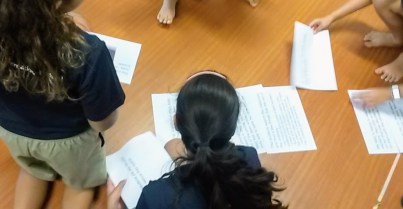 Throughout my time as a teacher, I have realised that the idea of a growth mindset (Dweck, mindsetworks.com) is one of the most important skills to have in life. A growth mindset refers to the idea that those who believe their abilities are malleable are more likely to embrace challenges and persist despite failure.
While working at the Calgary Girls’ School, I learned to embrace the Habits of Mind (habitsofmind.org). I learned that in order to achieve success one needs to work hard, and work smart. Excellence is the result of effort. Students benefit from the way that these habits are broken down into 16 specific ideas, which can be used in different situations and become part of the language of the learning environment.
Authentic Problem-Solving
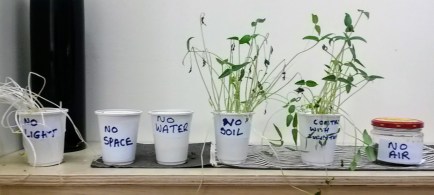 In order for students to be able to transfer what they have learned in school into real life situations, we as educators must provide learners with authentic problem-solving situations, that is, situations in which they are faced with challenges that channel real- life situations. For example, an English Second Language student learning about about food in English might benefit more from having a tea party where we use the vocabulary in spontaneous conversation, rather than filling out an activity page using the target vocabulary.
In many situations, active testing of the students’ thinking will allow them to become aware of any errors in their thinking by themselves. This allows students to own their learning, which helps them gain critical thinking skills.
Self-Advocacy
Self-advocacy is key for students who are learning to own their learning. They need to know how they learn best, and not be afraid to make this known, and to take steps to ensure they own their learning.
In order to be an independent thinker, we must not be afraid to question traditional thinking, or be afraid to disagree. 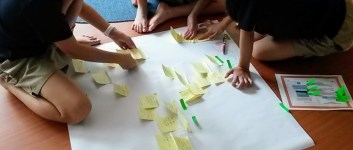 However, knowing how to express our opinions with diplomacy and tact is a vital partner in this.
 Ms. Marjorie LaFrance